Mama Capybara EST. 2026 Embroidery Review
As an embroidery designer who spends countless hours digitizing and testing files for boutique clients, I have learned to look past the pretty preview image. I need to know how a design actually behaves on fabric, how it translates to different garment weights, and whether it holds up as a premium product. Recently, I was tasked with reviewing the Mama Capybara EST. 2026 machine embroidery design for a potential limited-edition sweatshirt drop for a small online shop. This is not just another cute animal graphic; it is a specific embroidery file that promises a blend of rustic charm and modern minimalism. Here is my professional evaluation of how this design performs in a real-world commercial application.
First Impressions and Design Personality
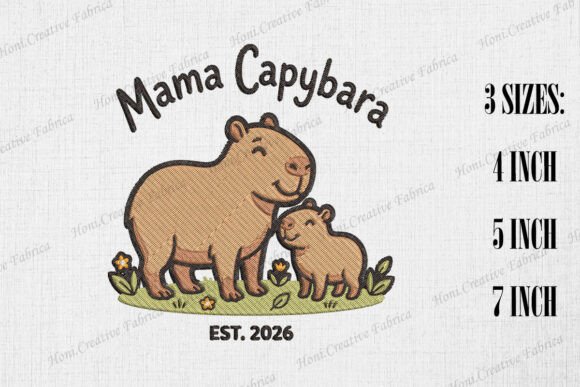
The moment you open the digital assets for Mama Capybara EST. 2026, the layout strikes me as balanced and confident. The title suggests a narrative—a mother figure established in a specific year—which immediately lends itself to storytelling branding. In the context of Mother S Day collections, this design hits the sweet spot between sentimental and playful. It does not feel overly ornate or cluttered, which is a common pitfall in many digital embroidery file offerings. Instead, it feels clean, allowing the viewer to focus on the character’s expression and the typography.
The mood is undeniably cozy. For a boutique brand looking to capture the "hygge" aesthetic that dominates current home decor and apparel trends, this design offers exactly what is needed. It is cute without being childish, making it viable for teenagers and adults alike. The inclusion of "EST. 2026" adds a vintage badge quality, suggesting durability and heritage, even if the brand is new. This visual cue elevates the perceived value of the handmade product, transforming a simple sweatshirt into a statement piece.
Application on Sweatshirts and Hoodies
Sweatshirt embroidery presents unique challenges due to fabric thickness and texture. The fleece inside standard hoodies can shift, causing puckering if the stitch density is too high or if the stabilizer choice is incorrect. My initial assessment of Mama Capybara EST. 2026 is that its moderate detail level makes it exceptionally forgiving on heavy cotton blends.
When placed on the chest of an oversized hoodie, the design commands attention without overwhelming the garment. I envision this looking particularly striking on neutral tones like oatmeal, heather grey, or soft sage green. These colors allow the thread colors to pop while maintaining a sophisticated, muted palette that appeals to modern consumers. Conversely, placing this on dark charcoal or navy black creates a bold contrast, especially if the capybara features lighter fill stitches. However, designers must be cautious with very dark fabrics, as fine details might get lost if the thread count is insufficient.
For a boutique brand, versatility is key. This design is not limited to the front center. I recommend exploring sleeve accents for a subtle touch of personality, or using it as a back print for a more dramatic effect. The scalability of the embroidery design allows it to shrink down nicely for smaller placements, such as near the cuff or on the pocket area of a kangaroo hoodie.
Color Palette and Thread Selection
The success of any embroidered project relies heavily on thread selection. For Mama Capybara EST. 2026, I would suggest avoiding overly neon or synthetic-looking threads. Instead, opt for matte rayon or high-quality polyester threads in earth tones. A warm beige or tan for the capybara’s fur, paired with a deep brown for the outline and text, will create a rustic, organic feel. If targeting a younger demographic, pastel pinks or blues could work well, provided they are used sparingly to maintain elegance. The key is to ensure that the thread colors complement the fabric rather than clash with it, ensuring the finished product looks intentional and high-end.
Technical Considerations for Production
Before committing to a large production run, several technical factors must be addressed. First, always check the recommended hoop size. While the design may fit in a standard 4x4 hoop, larger garments often benefit from a 5x7 or 6x10 hoop to allow for better stabilization and easier maneuvering. Using a cut-away stabilizer is non-negotiable for sweatshirts, as tear-away stabilizers can leave residue or fail to support the heavy fabric during washing.
Another critical aspect is wash durability. Embroidered designs on apparel undergo significant stress in the laundry. The stitch density of Mama Capybara EST. 2026 appears robust enough to withstand repeated cycles, but it is essential to test a sample piece thoroughly. Look for any gaps in the fill stitches or loose backing material after the first wash. Additionally, consider the fabric texture. On highly textured fabrics like boucle or thick waffle knits, fine details might disappear. In such cases, simplifying the design or increasing the stitch length might be necessary to preserve readability.
Marketing and Brand Identity
From a marketing perspective, Mama Capybara EST. 2026 is a powerful tool for building brand identity. The "EST." element implies longevity and trust, which can help build customer loyalty. For an Etsy seller or a small shop product owner, having a cohesive collection with consistent design language is crucial. This design fits seamlessly into a broader line of family-themed or nature-inspired apparel.
When creating listings, use high-quality printable mockup images that show the design on various garments. Highlight the texture of the embroidery in close-up shots to demonstrate craftsmanship. Customers want to see the quality of the finished product before they buy. Emphasize the handmade nature of the item, explaining how each piece is carefully stitched and inspected. This transparency builds trust and justifies a premium price point.
Expanding Beyond Apparel
While sweatshirts are the primary focus, do not limit your creativity. The description notes that this design works on baby’s onesies, home decor, and kitchen towels. This versatility allows you to cross-sell products. Imagine a matching set: a mom’s sweatshirt and a baby’s onesie featuring the same machine embroidery design. This bundling strategy can increase average order value and appeal to gift buyers looking for coordinated sets. Furthermore, using the design on tote bags or aprons can attract customers who prefer accessories over clothing.
Final Verdict
In conclusion, Mama Capybara EST. 2026 is a versatile and visually appealing embroidery design that is well-suited for commercial apparel use. Its balance of charm and simplicity makes it accessible to a wide audience, while its sturdy construction ensures it holds up well on heavy fabrics. For designers and entrepreneurs looking to add a touch of warmth and personality to their collections, this design is a strong candidate.
However, remember that success depends on execution. Always verify the specific file format compatibility with your machine, check the recommended hoop size for optimal placement, and select the right stabilizer for your fabric type. By paying attention to these details, you can transform a simple digital file into a cherished handmade product that resonates with your customers. Whether you are launching a new boutique brand or refreshing an existing Etsy listing, Mama Capybara EST. 2026 offers the potential to create something truly special.