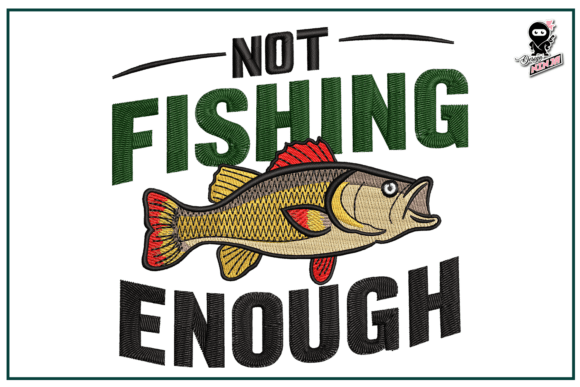
Not Fishing Enough Embroidery Design Review
As an embroidery designer who spends weekends hunched over a sewing machine and weekdays managing Etsy listings, I have learned that the difference between a design that sits in your folder forever and one that clears your craft fair booth comes down to three things: clarity, relatability, and production ease. Today, I am reviewing the Not Fishing Enough machine embroidery design. This piece falls squarely into the camping and outdoor lifestyle category, but its appeal extends far beyond just anglers. It is a perfect example of how humor and niche interests can drive sales for handmade product sellers.
First Impressions and Visual Appeal
The title Not Fishing Enough immediately sets a tone that is playful, slightly sarcastic, and deeply relatable to anyone who loves the outdoors but perhaps prefers the comfort of home when the weather turns bad. From a design perspective, this text-based or graphic-heavy concept relies heavily on legibility and charm. When I first loaded the file onto my hoop, the immediate question was whether the design felt bold enough to catch the eye of a passerby at a busy weekend market.
In my experience, simple typography with a clever twist often outperforms complex pictorial designs because it reads faster. A customer walking by a booth might not stop to decipher intricate details of a fish or a lake scene, but they will instantly read a funny phrase. This design feels modern and rustic simultaneously, making it versatile for various aesthetics, from farmhouse decor to contemporary streetwear. It does not feel overly decorative or soft; instead, it has a punchy energy that works well as a statement piece.
Product Versatility for Craft Fairs and Online Shops
One of the biggest challenges for small shop owners is finding a single digital embroidery file that can be turned into multiple high-value products. The Not Fishing Enough design excels here. Its adaptability makes it a powerhouse for both physical craft fair booths and digital product listings.
Apparel and Accessories
For apparel, this design shines on structured items. A black or navy baseball cap with this embroidered on the front panel creates an instant crafter's favorite. The contrast allows the thread colors to pop, and the curved surface of the cap frames the text nicely. Similarly, applying this to a heavy cotton tote bag design gives you a practical gift item that customers are happy to carry around after buying it. It also works beautifully on apron embroidery projects, appealing to cooks who love the outdoors.
Home Decor and Kitchen Textiles
Do not overlook the home decor market. Placing this design on a white tea towel embroidery project adds a touch of personality to a kitchen that already features rustic or cabin-style decor. It serves as a great conversational starter. Pillow covers are another excellent medium; a large-scale application on a linen pillow cover can elevate a living room space while showcasing the quality of your stitching.
Patches and Small Goods
If you offer custom patches, this design translates perfectly into an embroidered patch format. These are low-cost, high-margin items that impulse buyers often grab. They can be sewn onto denim jackets, backpacks, or children’s clothing. For fabric pouches, it adds a functional yet fun element to makeup bags or pencil cases.
Production Practicality and Sales Strategy
When evaluating any embroidery file, I always ask: How easy is this to produce in batches? The Not Fishing Enough design appears to have a stitch count that is manageable for standard commercial embroidery machines. This means you can run through a stack of caps or towels without excessive downtime for trimming threads. Consistency is key for maintaining brand consistency, and a design that runs smoothly helps ensure every finished product looks professional.
Photography for online listings is another critical factor. Designs with clear text and strong contrast photograph exceptionally well. Whether you are creating a printable mockup for your Etsy listing or taking photos of the actual item, this design will look sharp on screen. It photographs well against neutral backgrounds like wood, stone, or plain fabrics, allowing the product to stand out without visual clutter.
Careful Use Notes for Designers
While the concept is strong, there are technical considerations to keep in mind to ensure your small shop product maintains a premium feel.
- Stitch Density: Check the stitch density of the lettering. If the stitches are too dense, the fabric may pucker, especially on lightweight materials. If the density is too light, the text may look sparse and cheap. Always inspect the digitization closely.
- Fabric Texture: Avoid using this design on highly textured fabrics like thick boucle or rough burlap unless you are confident in your stabilizer choice. The texture can obscure fine details and make the text harder to read.
- Thread Contrast: Choose your thread colors
- Hoop Size Constraints: Confirm the recommended hoop size before starting. If the design is larger than your machine’s standard hoop, you may need to rehoop, which increases production time and the risk of misalignment.
- Small Details: Be cautious if the design includes tiny graphical elements alongside the text. These may get lost or become blurry if you attempt to scale the design down for smaller items like coin purses.
Final Verdict for Sellers
The Not Fishing Enough machine embroidery design is a smart addition to any commercial embroidery library. It targets a passionate niche (camping enthusiasts) with a broad appeal (humor lovers). For the Etsy seller or craft fair vendor, it offers multiple avenues for monetization, from apparel to home goods.
To maximize success, I recommend testing the design on scrap fabric first. Experiment with different stabilizers to find the best support for your chosen material. Create at least one real mockup to see how it looks in 3D space, not just flat on the screen. Finally, ensure you have reviewed the digital embroidery file licensing terms to confirm you are allowed to sell the finished products. With careful execution, this design has the potential to become a bestseller in your handmade product catalog.