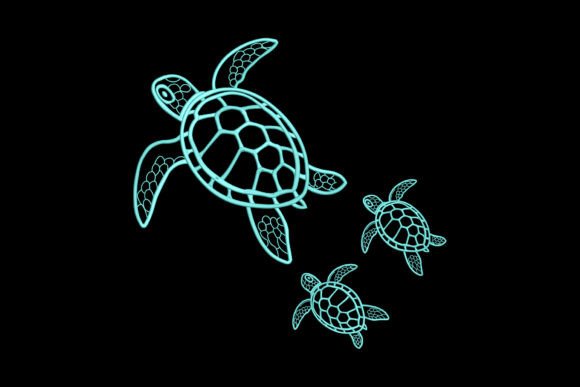
Sea Turtles Embroidery Review
As an embroidery designer who spends weekends hunched over a sewing machine and weekdays strategizing for craft fairs, I have learned that not all digital files are created equal. Some designs look stunning on a screen but fall flat in person. Others are technically perfect but lack the "stop-and-stare" factor needed to drive sales at a busy market booth. Today, I am putting Sea Turtles under the microscope. This design promises elegance and detail, claiming to be perfect for everything from tote bags to table linens. But does it hold up when you are trying to produce a batch of handmade products quickly without sacrificing quality? Let’s dive into the practical realities of turning this embroidery file into a profitable craft fair product.
First Impressions: Elegance Meets Market Appeal
The title Sea Turtles suggests a nature-inspired aesthetic, while the description emphasizes elegance and beautiful detail. From a designer’s perspective, this combination is promising. In a sea of generic floral or text-based embroidery, a detailed animal motif often stands out because it triggers an emotional connection. Customers love animals, and turtles specifically evoke feelings of calm, longevity, and oceanic beauty.
When I first loaded this machine embroidery design into my software, my immediate concern was the balance between detail and legibility. For a weekend market, your customers will likely view your items from a distance before they pick them up. If the details are too tiny, the design will just look like a blurry blob. However, if the silhouette is strong, it works as a focal point. Based on the description, this design seems to aim for a premium look rather than a cute, cartoonish one. This positions it perfectly for boutique makers targeting adults who appreciate subtle, sophisticated decor rather than loud, novelty gifts.
Product Potential: Where Does Sea Turtles Shine?
One of the biggest questions for any Etsy seller or small shop owner is versatility. Can this one digital embroidery file work across multiple products? The answer is yes, but with strategic application. Here is how Sea Turtles performs on key items:
- Tote Bag Design: This is perhaps the strongest use case. A canvas tote bag provides a large, flat surface area that allows the intricate details of the turtle to breathe. When placed centrally or slightly off-center on a neutral-colored bag, the design looks professional and high-value. It transforms a basic accessory into a statement piece.
- Apron Embroidery: For kitchen-focused buyers, placing the design on the bib or pocket of a linen apron adds a touch of farmhouse elegance. The contrast between the sturdy fabric and the delicate stitching enhances the perceived quality of the handmade product.
- Tea Towel Embroidery: Similar to aprons, tea towels are impulse buys at craft fairs. A well-executed Sea Turtles design on a cotton towel feels luxurious. However, be mindful of the hem; ensure the design placement does not interfere with the folded edge.
- Embroidered Patch: If the design allows, creating a patch version can open up new markets. Patches can be sewn onto denim jackets, backpacks, or hats, extending the life of the design asset beyond home goods.
- Pillow Covers: For home decor enthusiasts, a square pillow cover featuring this elegant reptile motif fits seamlessly into coastal or bohemian interior styles. It elevates the item from a simple cushion to a curated decor piece.
Production Realities: What Sellers Need to Know
Turning a digital concept into a physical inventory requires careful planning. As someone who has burned through thread and ruined fabrics due to poor setup, I cannot stress enough the importance of testing. Before you commit to producing fifty units for a Saturday market, follow these practical steps.
Stitch Density and Detail Clarity
The description mentions "beautifully detailed," which usually implies a higher stitch count. High detail is great for close-up viewing, but it can cause issues if the stitch density is too high for the fabric you are using. On lightweight fabrics like thin cotton tees, dense stitches can pucker the material, ruining the drape. Conversely, on heavy canvas, you need enough density to make the design pop. Check the hoop size requirements carefully. If the design is large, it may require a larger hoop, which limits where you can place it on certain garments like caps or small pouches.
Fabric Texture and Thread Contrast
Textured fabrics, such as waffle-weave tea towels or nubby linen, can obscure fine details. If your Sea Turtles design relies on tiny lines to define the shell pattern, a rough texture might hide those lines entirely. Always test on your actual production fabric. Additionally, thread choice is critical. Dark fabrics require bright or metallic threads to show up, while light fabrics offer more flexibility. Poor thread contrast is the number one reason customers reject embroidered goods because the design looks muddy or invisible.
Stabilizer Selection
You cannot underestimate the role of stabilizer. For a detailed design like this, a cut-away stabilizer is often recommended for woven fabrics to prevent distortion over time, especially for items that will be washed frequently, like aprons and towels. Tear-away stabilizers might work for temporary projects or non-washable items, but for a commercial-grade finished product, stability is key to longevity.
Visual Appeal and Brand Consistency
In the world of handmade commerce, visual consistency builds trust. If your booth features a cohesive color palette and style, customers perceive your brand as more professional. The elegant nature of Sea Turtles lends itself well to a clean, minimalist brand identity. It avoids the cluttered look of overly complex scenes, allowing the turtle to be the hero.
When photographing your printable mockups or listing photos for online sales, focus on lighting that highlights the texture of the embroidery. Shiny threads catch the light, adding depth. If the design uses matte threads, ensure there is enough directional light to show the dimensionality of the stitches. A well-lit photo can make a $5 item look like a $20 gift.
Final Verdict: Is It Worth the Production Time?
For commercial embroidery entrepreneurs, Sea Turtles appears to be a solid addition to your library. It bridges the gap between cute and sophisticated, appealing to a wide demographic. Its versatility across totes, apparel, and home decor means you can diversify your inventory without needing dozens of different designs.
However, success depends on execution. Do not skip the test runs. Inspect the design assets for any loose ends or jump stitches that might snag. Confirm that you have the proper commercial licensing to sell finished goods, as this is a common pitfall for new sellers. By paying attention to fabric selection, stabilizer use, and thread contrast, you can transform this digital file into a best-selling small shop product that turns heads at your next craft fair.
Remember, the goal is not just to embroider a picture, but to create a tangible object that brings joy. With its elegant appeal and broad applicability, Sea Turtles has the potential to do exactly that. Just remember to check your tension, trim your threads, and present your work with pride.