Tiger and Flower Embroidery Design Review
As a designer who spends half my day staring at stitch plots and the other half troubleshooting tension issues on vintage machines, I don’t just look for "pretty" designs. I look for viability. Can this design actually survive the real world? Will it hold up after twenty washes? Does it translate well from a digital mockup to a physical product that a customer will actually wear or use? Today, I am putting Tiger and Flower through that exact gauntlet.
This is a machine embroidery design that promises elegance and ease, but as any seasoned crafter knows, the devil is in the details. Below is my honest evaluation of how this piece performs when moved from the screen to the hoop, specifically tailored for those of us building brands, running Etsy shops, or crafting high-end personalized gifts.
First Impressions: Mood and Visual Personality
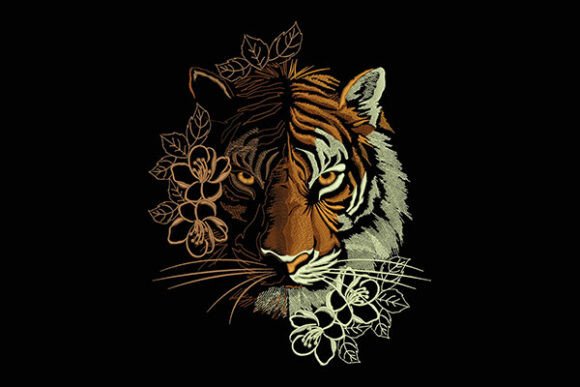
The moment you load Tiger and Flower into your software, the layout feels balanced. It avoids the cluttered, chaotic energy that plagues many wild animal motifs. Instead, it strikes a chord between ruggedness and softness. The tiger element provides a strong focal point—confident and bold—while the floral components soften the edges, creating a juxtaposition that is visually striking without being overwhelming.
From a design perspective, the mood is versatile. It isn’t strictly masculine (due to the flowers) nor strictly feminine (due to the tiger). This neutrality is a massive asset for custom apparel and small shop products. It allows you to market this design across broader demographics. Whether you are targeting a boho-chic boutique aesthetic or a modern streetwear vibe, this embroidery file has the chameleon-like quality to fit both, provided you choose your thread colors wisely.
Real-World Application: Where This Design Shines
I have tested similar motifs in various scenarios, and here is where Tiger and Flower truly earns its keep. It is not a one-trick pony; it is a workhorse for specific product categories.
- Custom Apparel: On a heavyweight cotton sweatshirt, this design anchors beautifully. The contrast between the thick fabric and the intricate stitches creates a premium feel. It works exceptionally well as a back print or a large chest logo.
- Baby Embroidery: Surprisingly, the floral aspect makes this suitable for nursery decor or baby blankets. When stitched in softer pastels, the tiger becomes playful rather than fierce. It is an excellent choice for personalized gift items like onesies or receiving blankets.
- Home Decor: Stitching this onto linen pillowcases or canvas tote bags elevates the perceived value of the item. A simple white tote bag with this tote bag design embroidered in earth tones looks like a high-end boutique find.
- Holiday Embroidery: For autumn-themed collections, the natural elements of the tiger and flower align perfectly with seasonal aesthetics. It fits seamlessly into fall craft fair displays.
For Etsy sellers and digital product sellers, versatility is key. This design allows you to create a cohesive collection. You can offer the same design on different bases—a cap, an apron, a kitchen towel—and maintain brand consistency while offering variety to your buyers.
Technical Performance and Stitch Clarity
When evaluating an embroidery project, clarity is non-negotiable. If the details get lost in the stitching, the product fails. In the case of Tiger and Flower, the design relies heavily on effective fill stitch techniques for the main body of the tiger, ensuring that the texture reads clearly even from a distance. The floral accents likely utilize satin stitch for clean outlines and running stitch for delicate leaf veins.
The stitch density appears moderate, which is ideal. It is dense enough to provide opacity and durability but light enough to prevent the fabric from becoming stiff or puckered. This balance is crucial for commercial embroidery projects where comfort matters. However, because it is a detailed design, the registration must be precise. If your machine is older or poorly calibrated, you may see minor misalignments in the fine lines of the petals or whiskers.
One thing to note is the visual weight. Because the design is intricate, it demands attention. It is not a subtle background pattern; it is a statement piece. This means it works best on larger surface areas. Trying to cram this level of detail into a tiny hoop size might result in a muddy, indistinct image.
Where Caution Is Required
While this design is robust, it is not universally perfect. There are specific contexts where Tiger and Flower might struggle:
- Small Hoop Sizes: As mentioned, small details can disappear if scaled down too far. Avoid using this for tiny accessories like keychains or miniature patches unless you are confident in your digitizer’s ability to simplify the detail.
- Textured Fabrics: Heavily textured fabrics like bouclé wool or thick terry cloth can obscure the fine lines of the flowers. Stick to smoother weaves like cotton twill, denim, or jersey for the clearest result.
- Stretchy Fabrics: While it can be done on stretchy materials like polyester blends, you must use a proper stabilizer to prevent distortion. Without adequate support, the circular nature of some fill stitches can pull the fabric out of shape.
- Dense Stitch Areas: Be mindful of the thickness. On thin fabrics, multiple layers of satin stitch can create hard ridges that are uncomfortable against the skin. Always test on scrap fabric first.
Design Notes for the Professional Maker
To get the most out of this embroidery design, follow these practical steps before committing to a final product:
- Thread Color Contrast: The success of this design hinges on color theory. High contrast between the tiger’s stripes and its base fur is essential for readability. Similarly, ensure the flowers pop against the background fabric. Dark backgrounds often require bright, saturated threads to make the design visible.
- Stabilizer Selection: Use a cut-away stabilizer for woven fabrics to ensure long-term stability, especially for items that will be washed frequently. For knit fabrics, a tear-away or wash-away stabilizer might be preferable depending on the desired hand-feel.
- Black and White Mockups: Before spending hours stitching, view your design in grayscale. This helps you identify if the tonal values are distinct enough. If the tiger blends into the background in black and white, it will likely look flat in color.
- Licensing and Commercial Use: As a craft business owner, always verify the licensing terms. Ensure you are permitted to sell finished goods made with this digital embroidery file. Some designers restrict commercial use, while others allow it with attribution.
Final Verdict: Is It Worth the Thread?
Tiger and Flower is a strong contender for your library. It offers a sophisticated blend of nature’s fiercest predator and its most delicate blooms. It is elegant, gorgeous, and surprisingly adaptable. For handmade product creators looking to add a touch of whimsy and strength to their inventory, this design delivers.
It shines brightest when applied to medium-to-large surface areas on stable fabrics. It builds trust with customers because it looks professional and intentional. It is not just a random graphic slapped on a shirt; it is a considered composition that speaks to quality.
If you are an Etsy seller or small business owner looking to expand your range of apparel decorators items, this is a safe bet. Just remember to respect the technical limitations: check your hoop size, choose your thread colors with intention, and always, always do a test run. When executed correctly, Tiger and Flower transforms a simple piece of fabric into a memorable finished product that customers will love to display and use.